Leasing, renting or a loan for an EV in Colombia: who owns it, what the payment includes and when it pays
With a loan the car is yours from day one; with leasing it belongs to the bank until the purchase option; with renting it is never yours, but the payment includes insurance, maintenance and taxes.
By Mejor Eléctrico Staff4 min read
There are three ways to have an EV in Colombia without paying cash, and the underlying difference between them is not the rate. It is who appears as the car’s owner and which expenses are inside the payment. That defines who gets the tax benefits, who takes on depreciation and how much you really pay each month.
Car loan: the car is yours
The bank lends the money and the car is in the buyer’s name from day one, with a lien in the bank’s favor until the loan is paid. Insurance, vehicle tax, SOAT (the mandatory accident insurance) and maintenance are the owner’s responsibility.
As the owner, the buyer is the one who can request the VAT refund on a new EV with a certificate from the UPME, the energy planning unit, and who takes on the car’s depreciation. Green rates reported in 2026 run from about 12.5% to 16.6% effective annual. The expenses added to the payment are in the hidden costs of a loan.
Leasing: the car belongs to the bank until you buy it
With leasing, the lender buys the car and hands it to the customer in exchange for a monthly fee. At the end of the contract, the customer can keep it by paying the purchase option, a percentage agreed from the start. Meanwhile, the bank is the legal owner.
Which expenses go into the fee depends on the contract: you need to ask whether it includes insurance, vehicle tax or maintenance, or whether the customer pays them. Leasing is more common among companies, for tax reasons we explain in buying an EV in a company’s name.
Always ask who can request the VAT refund under a lease: since the invoice is in the lender’s name, the benefit does not work the same as with a loan.
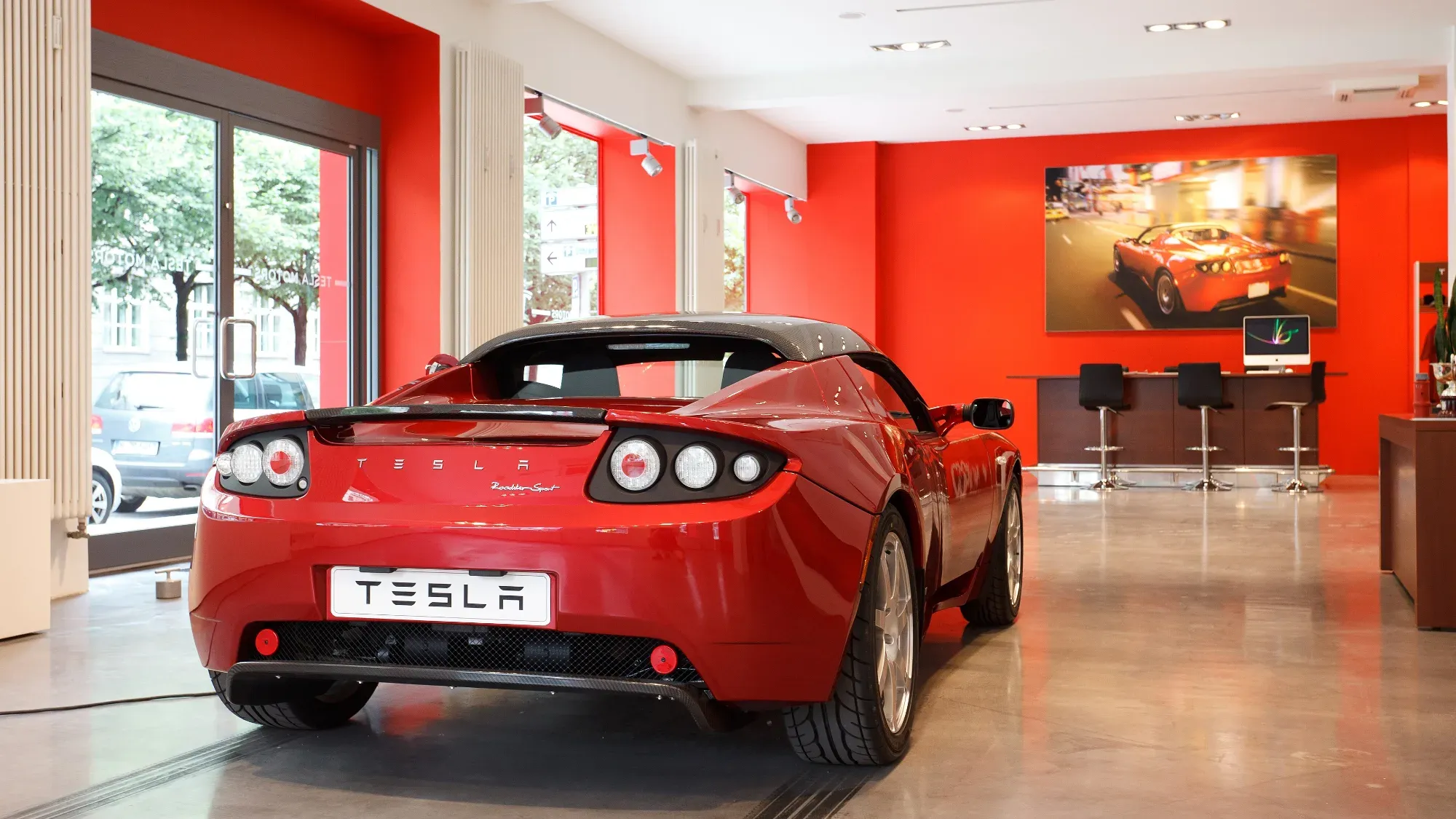
 Before signing a lease, ask which expenses go into the fee and who can request the VAT refund. Photo: Michael Rivera, CC BY 4.0, via Wikimedia Commons.
Renting: you pay to use it, it is never yours
Renting is a long-term rental. The renting company owns the car and the customer pays a fixed fee that includes insurance, maintenance, taxes and SOAT. At the end of the contract, the car is returned or swapped for another.
For reference: in November 2024, Portafolio reported that Muverang, which rents a 100% electric fleet in Colombia, charged an average of about COP 1.9 million a month for a car, and COP 169,900 a day with VAT included, with unlimited mileage. That figure is two years old; today’s fee depends on the model, the term and the company.
The advantage of renting an EV is that it shifts the risk of depreciation and the battery to the company, two of the most common doubts for first-time EV buyers. The drawback is that, at the end, you are left with no asset.
How they compare
| Loan | Leasing | Renting | |
|---|---|---|---|
| Owner during the contract | The buyer | The lender | The renting company |
| At the end | The car is yours | You can buy it with the purchase option | You return it |
| Insurance, taxes, maintenance | You pay them separately | Depends on the contract | Included in the payment |
| Depreciation risk | Yours | Yours if you exercise the option | The company’s |
| Mostly used by | Individuals | Companies | Companies and people who change cars often |
To compare seriously, add up a year of loan payments plus insurance, tax, SOAT and maintenance, and put that figure next to the annual renting fee. The renting payment always looks higher because it already has everything inside.
If you plan to keep the car for many years, a loan usually leaves you an asset that renting does not. If you would change it in three or four years and worry about what a used EV will be worth, renting takes that risk away in exchange for leaving you with nothing.
Frequently asked questions
What is the difference between leasing and renting?
With leasing you can buy the car at the end with the purchase option. With renting you return it, and the payment includes insurance, maintenance and taxes.
Can I request the VAT refund if the car is leased?
The invoice is in the lender’s name, so the benefit does not apply the same way as with a loan. Ask the lender before signing.
Is renting available to individuals?
Yes. There are renting companies with plans for individuals, such as Muverang or Renting Colombia. Compare the fee with what you would pay in installments, insurance, taxes and maintenance if you bought.
Sources: La República: rates and benefits for EVs in 2026 · Portafolio: the EV rental market according to Muverang (2024)